Wednesday, April 22, 2015

First Time Flier

Going on your first airplane ride can be scary and exciting, soaring above the clouds like a bird. But before you take off there are some things you have to do. This is why we need the help of our friend Big Jake to help navigate us through the airport and find our way to the airplane. 
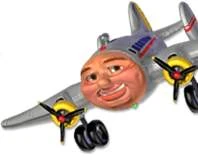

Figure 1: Big Jake
Hello kids! I am Big Jake, I am the grown up plane around here and am in charge of teaching all the younger planes important lessons, but today its your turn to learn! I am going to teach you how to make your way through an airport so that you can climb aboard me and we can fly away together! 


Once you arrive at my home, the airport, you will need to say good bye to your car and hello to a new ride, my set of wings! You will need to drop off your luggage to the luggage clerk. She will take your bags and store them in the basement of the plane until you have gotten to your destination. 

What happens to your bags while they are away? thats easy! Every bag gets checked before they let it in my basement to make sure there is nothing that could hurt me or my passengers (2). If there is something hazardous in your bag, they will not let it ride on the plane with you. To make sure this doesn't happen, make sure you follow my rules: (5)

Figure 2: Packing

What to bring in your Suit Cases? 
  • clothes
  • shoes
  • toothbrush
  • jewelry
What not to bring in your suitcase?
  • laptop

After you drop your luggage off, you will have to go through security. Here you will be checked by a TSA Officer to make sure that you do not have anything in your pockets that could be dangerous to me or the other passengers aboard me! A TSA Officer is a special police officer that works only at airports making sure everyone is safe. 

How do they check your body? Another easy one! The TSA Officers will send you and your family, one by one, through a machine that is a metal detector AND an X-ray (3)! The Officers will watch you on a screen and might even think you are an actual skeleton! After checking to make sure you are safe, the TSA officers will check your backpack and make sure there is nothing dangerous in it. Your backpack is also sent through a metal detector. If there is anything unsafe in there, the officer will search your bag and figure out what it is. To make sure this doesn't happen, follow my rules: (6)


What to bring in your backpack? :
  • tablet/computer/ DVD player
  • toys
  • coloring books
  • books
  • snacks
  • gum


What not to bring in your backpack? :
  • drinks
  • sports equipment
  • scissors

After you have gotten through security, you are in the airport terminal. This is a special place where only passengers can go. Here you will find your Gate number. Each terminal has many waiting areas called gates. Each gate has its own airplane and destination. With the help of your parents, you will need to locate your gate so that you get on the correct plane. 

After you have gotten to the correct gate, it is FINALLY time to board you airplane! This is the exciting part! Once you get on the plane, you will put your backpack under your seat. There will be a flight attendant who gives you a few safety lessons, then it is time to fly!
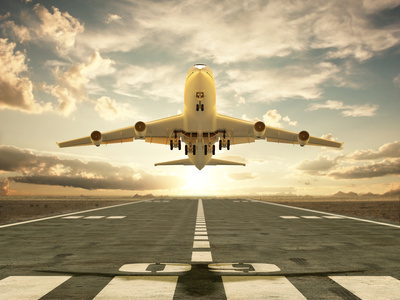
Figure 3: Take Off!
You will hear my engine roaring! You will feel my wheels spinning, then you will stop feeling gravity hold you down, we have taken off!


Enjoy your flight kids! I am glad I got to teach you how an airport works during your first airplane ride. See you again soon!


Big Jake [illustration]. (2010). Retrieved from PBS website: http://vignette3.wikia.nocookie.net/jayjay/images/1/18/Fun_meet_bigjake_lg.jpg/revision/latest?cb=20090716171907
Cranky Flier. (2011, March 31). What happens after you check your bag [Web log post]. Retrieved from http://crankyflier.com/2011/03/31/what-happens-after-you-check-your-bag/
Full Body Scammer Image [Picture]. (2015). Retrieved from http://img.gawkerassets.com/img/17dlzu062kjhajpg/original.jpg
Packing [illustration]. (2014). Retrieved from New York Times website: http://static01.nyt.com/images/2014/03/02/travel/02GETAWAY/02GETAWAY-master675.jpg
Take Off! [Illustration]. (2015). Retrieved from Pixshark website: https://tomakeaprairie.files.wordpress.com/2012/10/airplane-take-off.jpg
TSA Prohibited Items. (2015, April 08). Prohibited items. Retrieved from http://www.tsa.gov/traveler-information/prohibited-items#4


Middle Age Torture

Figure 1. Saw Torture
Hey kids, could you imagine if you didn't listen to your teacher one day, and she cut you in half with a saw?! Back in the old days, way older than your grandpa, they pretty much used to do that. If you were a witch or stole something from the olden days Wal-Mart, the king would tell his people to bring out the saw, and cut you in half! (1)

This type of torture was know as saw torture, as shown in Figure 1. The towns people loved this because they would get to watch the person being cut in half and their blood fly everywhere. The only gross part about this type of torture was that they would be all gross and naked. (1) For these people watching other people get tortured was like their old time video games, except more bloody and cool.

Another cool way people were punished back in the day was, they were placed in a giant metal bull and then put over over a fire. (2) This technique was called, The Brazen Bull, and was popular with the ancient Greeks. (2) It actually cooked the people in the box! They would put the people in the bull because, when the person would scream because they were burning, it would sound like a bull grunting. (2)


Figure 2. Vlad the Impaler

Many kings and queens loved the idea of torturing their enemies, but no one loved it more than Vlad the Impaler. (Figure 2) You may know him as his famous name, Dracula. He was a prince in Romania about 500 years ago. (2) I bet you heard some crazy stories about Dracula,and they are most likely true. Historians say he his the most violent man EVER! (2)

He got his name Vlad the Impaler because his favorite type of torture was impalement. This is when the victim was forced to sit on a sharp, thick pole, like the flagpole outside your school. (2) The pole was then raised up by Vlad,  and the victim would slide down the pole with their own weight. It could take the victim 3 days to die using this method. Some people claim that Vlad did this to 20,000 people all while enjoying a meal! (2) 20,000 people! Thats like 500 school buses full of kids! He did all this while eating a meal, he defiantly was crazy!


Some torture techniques they used in medieval times were so cool and bloody, they actually put them in video games. Have you ever played Assassin's Creed? Well, the guillotine technique is used in that game.Shown below in Figure 3 is an actually picture from the game, Assassin's Creed. The guillotine was famous during the French Revolution made of a tall wooden frame and a very sharp and heavy blade is at the top.(4)The victim is secured at the bottom of the frame, their neck is placed directly below the blade. The blade is then released, chopping the victims head clean off. (4)
Figure 3. Guillotine
So there you go, next time you play Assassin's Creed watch for the guillotine, and remember the French loved that. Who says you can't play video games and learn a little history at the same time? 


References 


1. Medieval torture. (2008, November 29). Saw Torture. Retrieved from http://medievality.com


2.  Grabianowski, E. (2015). The Brazen Bull. HowStuffWorks

3. Linke, D. (n.d). Vlad tepes. Retrieved from http://donlinke.com

4. Andrews, E. (2014). 8 things you may not know about the guillotine. History

Saw torture. (2013). Retrieved from list 25 website: http://list25.com/25-most-brutal-torture-techniques-ever-devised/5/

Vlad the Impaler. (n.d). Retrieved from Don Linke website: http://www.donlinke.com/drakula/vlad.htm

Guillotine. (2014). Retrieved from GameQuiche website: http://gamequiche.com/2014/07/14/assassins-creed-unity-revolution-gameplay-trailer-heads-will-roll/


Considering a Protest

Have you ever refrained from eating the school lunches for a few days or even longer? Participated in a walk-out in school for any number of reasons? Petitioned the firing of a teacher you or your friends loved? Maybe even petitioned the cutting of funds for sports or other extracurricular activities? Or possibly even went to the school board because you didn't agree with taking a particular standardized test?

Believe it or not in all of these situations you would have been participating in a form of a protest. This type of demonstration is not restricted to only adults, for the most part any American can actively participate in one. All you need to do is be able to visually or physically express disagreement against a rule/policy to get your opinion out there. This form of expression is used to help educate others and open there eyes up to a new way of thinking about something.

You may see in the news, on an online source, or even just hear others talk about large groups of people gathering outside voicing their opinions. It could also be people walking around with signs, petitions, flyers, small groups, people being loud and rambunctious or just standing quietly simply wanting to be seen. All of these descriptions can be used to characterize a protest but are far from the only ones. Not one protest is the same and is looking for the same outcomes as another. Every organization/movement is different, some want to enforce a change and others just want to bring attention to an unjust law/government action.
Where can you protest:(1)
streets
sidewalks
parks
other locations the government sets

What can you hand out:(1)
leaflets (pages of information)
newspapers
petitions
solicitations for donations

The first amendment within the constitution states that you have the right to freedom of religion, press, and speech, the right to peacefully assemble, and the ability to petition the government (2). You cannot do whatever you want because this is a given right to all Americans, you still have to be respectful to those who are not participating and the people around you. Protesting as a whole has been used countless times over the years to bring change as the people and time period evolves. Although it has been around for so long, protesting is an art that still doesn't get much support and people are hesitant to participate. Protesting can be used to stand up for our civil liberties, a ruling in court that the people disagree with and for countless other disagreements we have against something. 
Before you agree or decide to participate in a protest make sure you look into the group to find out their goals or even the values/morals they have. You don't want to involve yourself in an organization that might attract violence with their actions. 

If you are looking to engage in this right, there are two types of protests to be considered; a peaceful protest or a violent protest (3). But within each of these categories there are many different options and choices people can decide between. Throughout history their have been quiet a few of each. Although a great number of them are peaceful protests they can be turned violent because of the actions of outside forces. 

Another important factor within a protest is the consideration of police presence. It is typical for police to appear during any protest to ensure the safety of all those participating and the citizens within the area (4). However, it is up to both the demonstrators and the police to communicate and cooperate with each other to keep the peace and refrain from anything bad happening.

All protests have the ability to get their opinions out and into the world and do so peacefully. All those participating just have to remember the rules and be civilized and not engage with others who disagree with their values. So please if you decide to use your first amendment rights remember to remain calm no matter what and be responsible!!

References:
(1)American Civil Liberties Union. (n.d). Demonstrations and protests. In Know your rights: demonstrations and protest. Retrieved from http://www.aclu.org/print/free-speech/know-your-rights-demonstrations-and-protests
(2) National Constitution Center. (n.d). Freedom of religion,speech, press, assembly, and petition. In Amendment 1. Retrieved by http://www.constitutioncenter.org/constitution/the-amendments/amendment-1-freedom-of-religion-press-expression
(3) A Force more powerful. (n.d). 198 methods of nonviolence. In Nonviolent strategies and methods. Retrieved from http://www.aforcemorepowerful.org/resources/nonviolent/methods.php
(4) Smith, W. (2012). Policing civil disobedience. Political Studies. 60(4), 826-842.